Inteli-lens
Year: 2022
Could movement reveal signs of impairment?
An independent computer-vision experiment exploring whether walking patterns and body language could help identify possible intoxication.
- Type
- Independent project
- Tools
- Python
- JupyterLab
- OpenCV
- TensorFlow
The idea
I built Inteli-lens to explore computer vision and find out whether it was a field I wanted to pursue. Inspired in part by the case of Kenneka Jenkins and concerns about impaired driving, I became interested in whether a camera could identify visible signs that someone might be intoxicated.
The idea was to analyze walking patterns and body language in video, producing an estimated likelihood of intoxication. I imagined a possible application in parking lots: if the system flagged someone before they entered the driver’s seat, they could be offered a breath alcohol test before leaving.
Building the prototype
Working independently in JupyterLab, I experimented with Python, OpenCV, and TensorFlow to explore video-based detection. The prototype detected people and displayed an estimated likelihood that changed as their movement was analyzed.
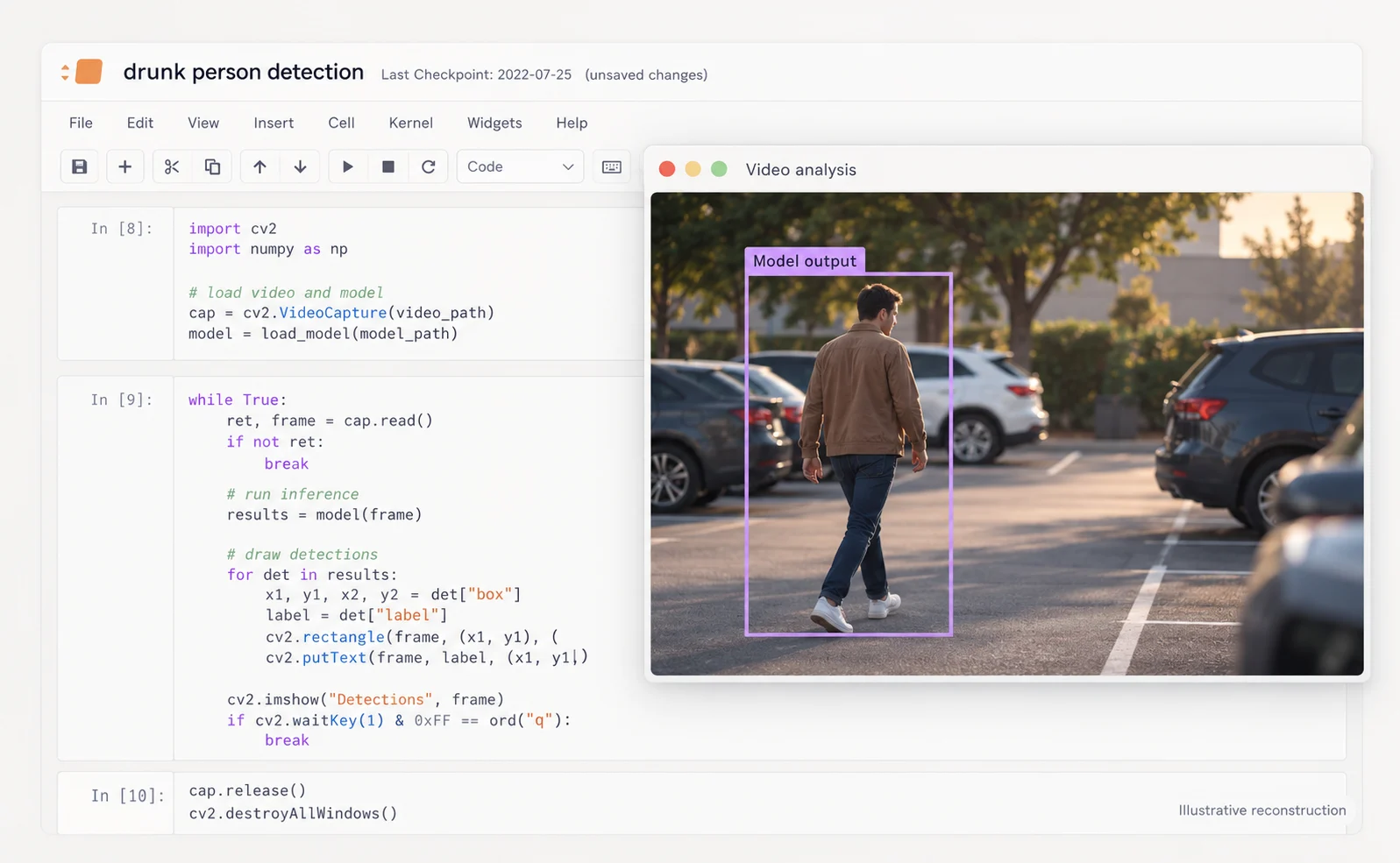
The biggest limitation was data. Footage of people walking with reliable information about whether they were sober or intoxicated was difficult to find, leaving a small dataset to train and evaluate the model. I explored ways to prepare and vary the available data, but the project remained an early experiment rather than a validated tool for assessing impairment.
Looking back
Inteli-lens was an early opportunity to take an idea from a question to a working experiment. It showed me both the possibilities of computer vision and how much a model depends on having the right data.
More details to come as I revisit the original project materials.